
2025-2026 Annual report
Transforming care for lasting change
For many people in Canada – including First Nations, Inuit and Métis peoples, those experiencing homelessness and individuals from rural and remote communities – a cancer diagnosis comes with a second challenge: navigating a system that was not designed with them in mind.
This year, that began to change. Not just in isolated projects, but in models of care designed to address inequities in access to and delivery of cancer care, now embedded in health systems and generating evidence that is reshaping how care is designed and delivered. Across the country, CPAC’s partners moved from testing innovative approaches to demonstrating what works and, in many cases, securing sustained investment beyond CPAC funding to continue that work.
On this page:
- Bringing care closer to home
- Designing care for people facing the greatest barriers
- Expanding access to palliative care
- Supporting adolescents and young adults: Oncofertility
- Life after cancer: Survivorship and psychosocial support
Bringing care closer to home
For people living outside major urban centres, accessing cancer care often means long travel, time away from family and additional financial strain. Several projects are reducing that burden by bringing care closer to where people live.
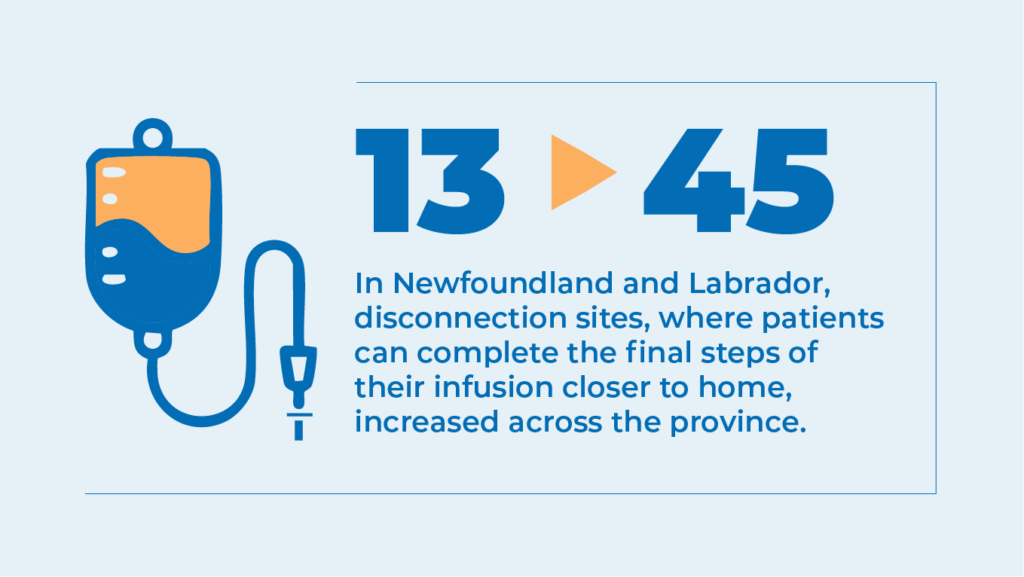
In Newfoundland and Labrador, the CPAC-supported Adult Home Infusion Chemotherapy Program has significantly expanded access to community-based care. Disconnection sites, where patients can complete the final steps of their infusion closer to home, increased from 13 to 45 across the province. The program has also removed geographic eligibility restrictions and implemented a self-disconnection process, allowing far more patients to access home-based chemotherapy regardless of where they live. At the same time, education, policies, after-hours support and coordination mechanisms have been standardized across the province, improving both quality and safety as the program scales.
This expansion has strengthened equity in a particularly meaningful way: Miawpukek First Nation in Conne River has been included as a local disconnection site, bringing home-based chemotherapy services directly into a community that previously had no local access to this step in their care. The successful rollout was made possible through relationship-building with Indigenous communities and strengthened partnerships with Conne River Health and Social Services.
By providing our Indigenous clients with the opportunity to complete their infusion chemotherapy treatments at home, we are able to improve quality of life, increase access and provide care closer to home. This approach supports improved healing and reduces stress by eliminating the need for them to spend several days away from their families, loved ones and community.
– Daniel McDonald, Public Health Nurse, Conne River Health and Social Services
The Northwest Territories transformed cancer care delivery through a Nurse-Led Virtual Medical Oncology Care Model that helps patients access specialized oncology support while remaining in their home communities. Developed to address geographic, access, and equity challenges across the territory, the model provides virtual care coordination, symptom management, patient education, and psychosocial support, strengthening continuity between territorial and out-of-territory oncology services.
Evaluation findings demonstrated improved patient and provider experience, stronger care coordination, and enhanced system capacity. As a result of its success, the initiative has transitioned from a time-limited project to a permanent territorial program, creating a sustainable and scalable model for delivering high-quality cancer care in northern and remote communities.
Designing care for people facing the greatest barriers
Some of the most significant progress in cancer care this year comes from work designed around the needs of those the system has historically left behind.
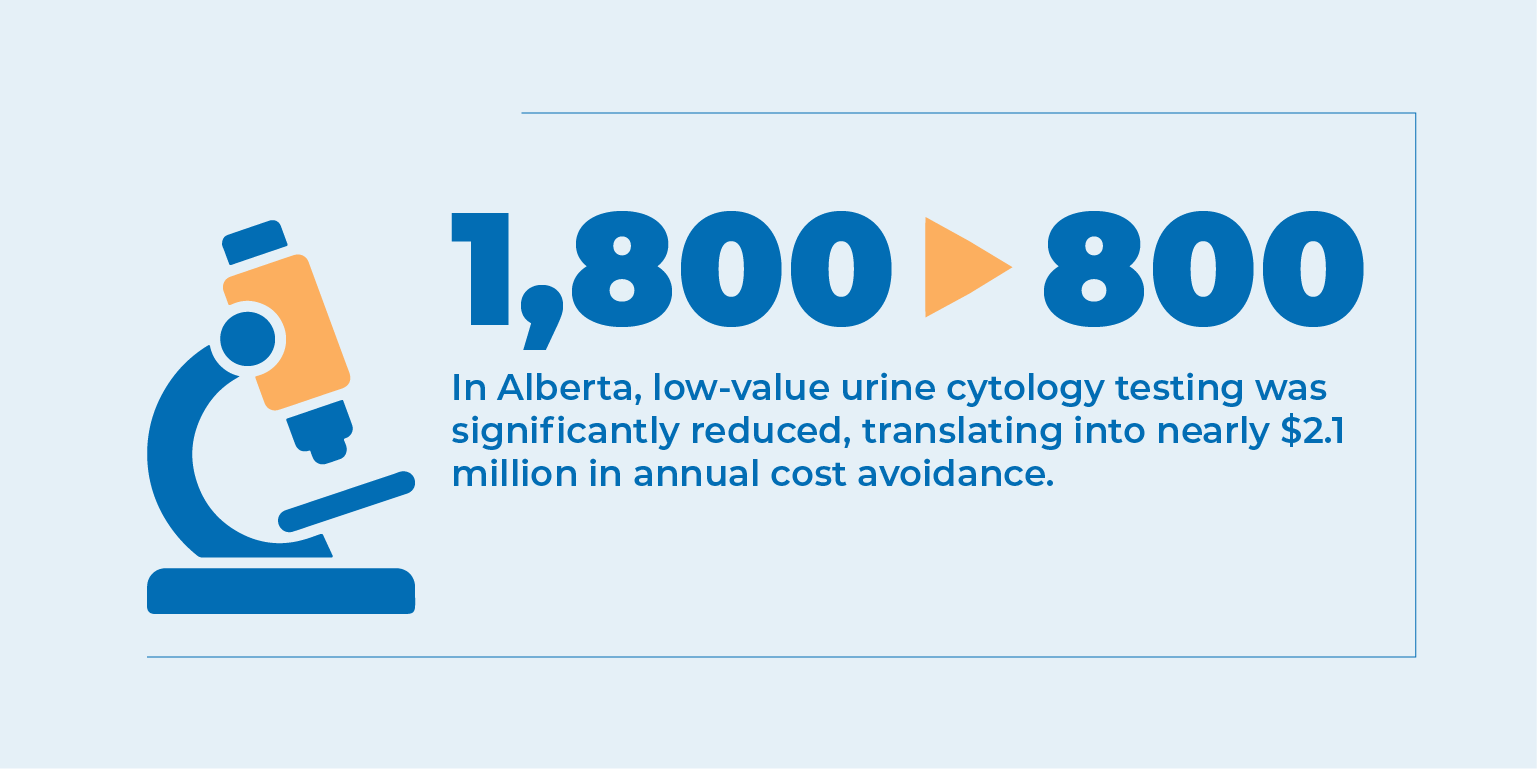
In Alberta, partners in Calgary (The Alex) and Edmonton (Radius Community Health and Healing) developed the province’s first cancer diagnostic model of care for people experiencing homelessness, ensuring that supports like housing, access to food, transportation and mental health services are woven into the diagnostic process, not treated as afterthoughts. In addition, the initiative established evidence-informed provincial diagnosis pathways for genitourinary (GU) cancers, such as bladder and kidney cancers.
Early results are promising: unnecessary GU cancer investigation testing has dropped, with more patients arriving at specialist appointments properly prepared with appropriate diagnostic imaging, and providers reporting stronger collaboration and a greater ability to advocate for those navigating complex circumstances.
The model is now being embedded into Cancer Care Alberta operations. What began as a targeted intervention has become standard practice – and proof that equity-focused design can reduce waste while improving care.
This project demonstrated that equity, quality and efficiency are not competing priorities, but complementary ones. When system design begins with the needs of equity-deserving populations, all three functions can be advanced simultaneously, creating improvements that benefit the entire population.
– Michael Sidra, Senior Program Lead, Provincial Systems, Programs and Performance, Cancer Care Alberta
In Saskatchewan, a new clinic for monoclonal gammopathies (a spectrum of blood conditions ranging from benign to cancerous) is improving access to cancer care for northern communities, where Indigenous patients make up roughly half the population. The clinic includes direct links to the region’s palliative care network – an important connection for patients living with a disease that has no cure.
At the heart of the model is a commitment to culturally safe care. Patient education resources have been co-developed in local languages, and the province’s inaugural First Nations and Métis Patient Navigator has been embedded in the clinic – bringing dedicated support to a population that has historically faced significant barriers to accessing care.
In British Columbia, an evaluation of the Indigenous Patient Navigation program is helping identify pain points and strengthen supports for Indigenous patients and families across the province. Yukon has drawn on BC’s experience as they develop their own navigation program – an early sign of the kind of cross-system learning this work was designed to produce.
The evaluation demonstrates that the Indigenous Patient Navigator Program is a critical and highly impactful model of culturally safe, relational cancer care for Indigenous peoples across British Columbia.1
In Ontario, a nutritional support program for Inuit cancer patients in Ottawa is changing what culturally safe care looks like in practice. Co-designed with Tungasuvvingat Inuit, Wellspring Cancer Support Foundation, The Ottawa Cancer Foundation, Elders, an Inuit chef and nutritional experts, the program delivers nutrition education and support that reflects Inuit traditions, language and locally available foods. The program also reinforces why access to traditional foods during the cancer journey is an important priority for measurement and reporting, alongside access to care and resources in patients’ preferred language.
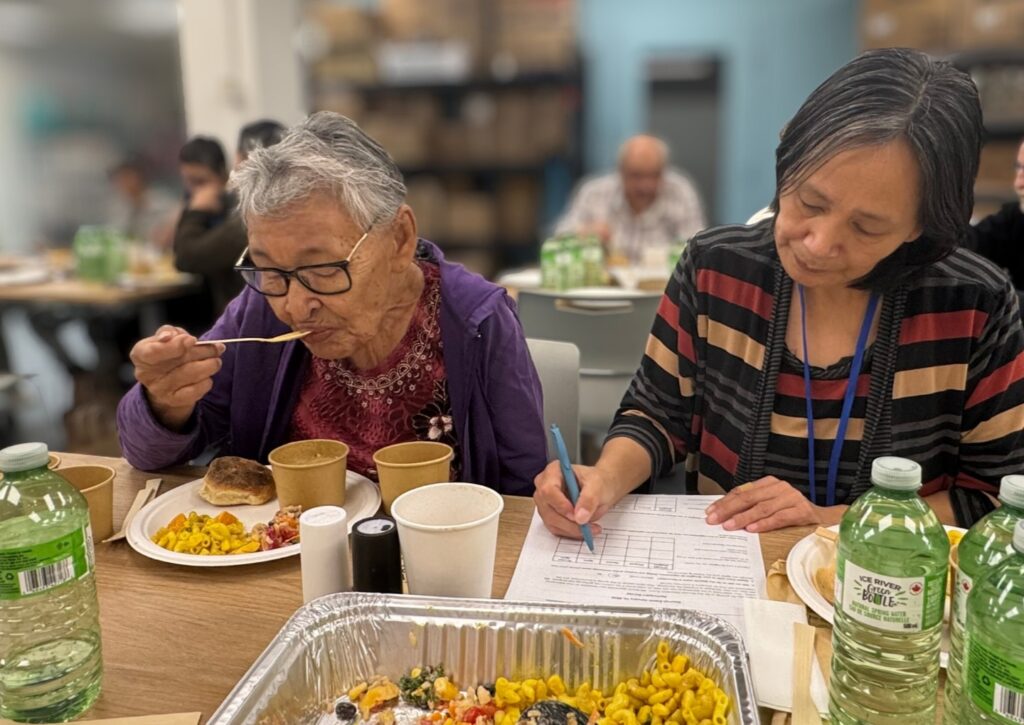
Through workshops and food bank sessions, patients and their families build practical skills in healthy eating, symptom management and long-term survivorship. The program also strengthens something more difficult to measure: trust between Inuit communities and the broader cancer support system.
Expanding access to palliative care
This year marked a significant milestone for the Improving Equity in Access to Palliative Care (IEAPC) collaborative – a partnership between CPAC and Healthcare Excellence Canada to improve access to high-quality palliative care for people who face barriers such as homelessness, vulnerable housing, distance from care and other social or structural challenges.
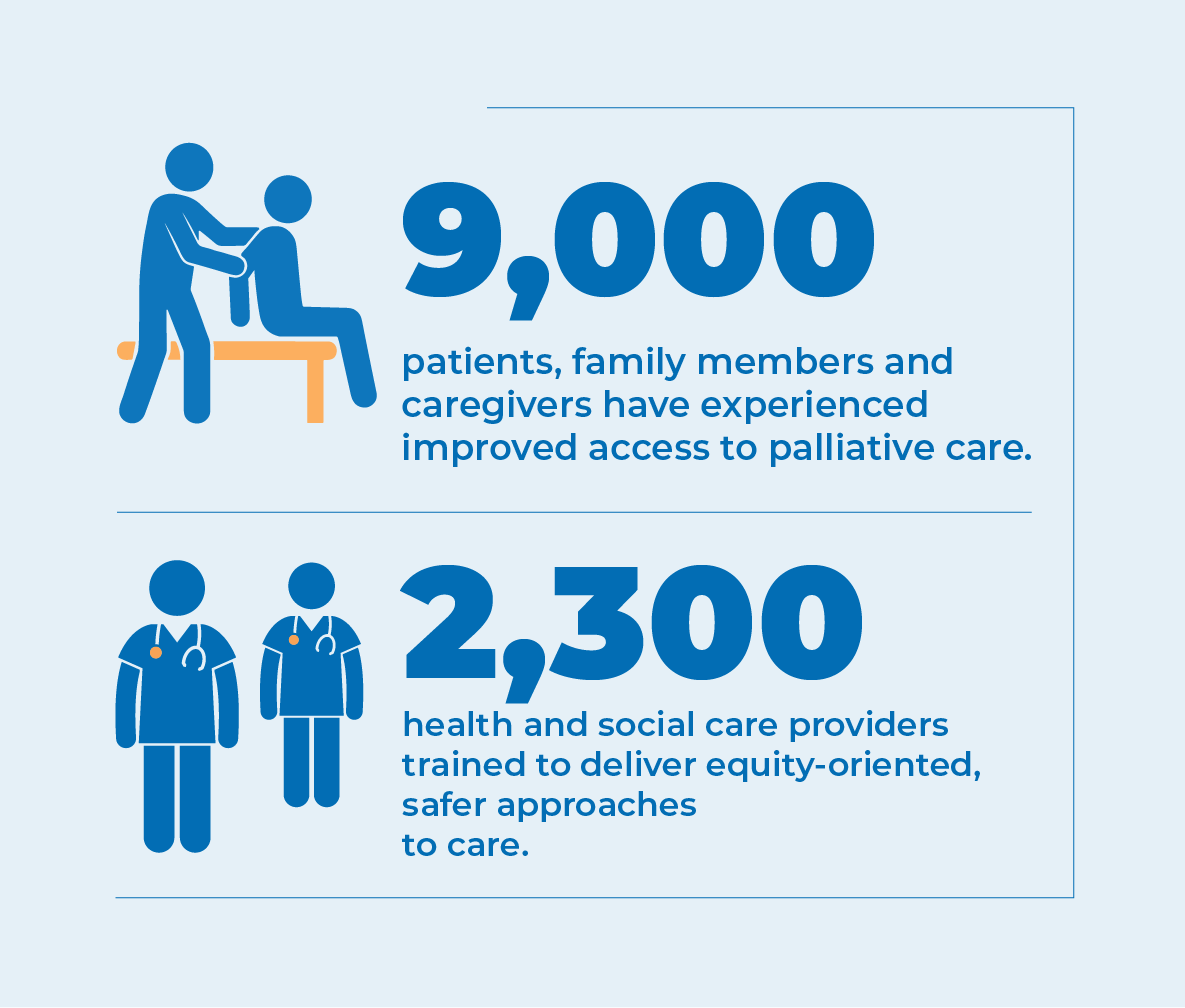
Across 23 communities in eight provinces, the initiative has supported more than 9,000 patients, family members and caregivers, while training more than 2,300 health and social care providers to deliver equity-oriented, safer approaches to care – building lasting capacity within communities. By bringing care directly into shelters, homes and community organizations, these models make palliative care easier to access for people who have difficulty getting care through traditional healthcare services. An economic evaluation of the equity-oriented mobile based models confirms the approach is both clinically effective and cost saving.
Palliative care is a human right and everyone deserves equitable access. Through the IEAPC collaborative, we were able to show that by coming together, being creative, being passionate, and compassionate, we can create positive change in health care. I’m very grateful to Healthcare Excellence Canada and to the Canadian Partnership Against Cancer for genuinely not just talking the talk, but walking the walk too.
– Dr. Naheed Dosani, Palliative Care Physician, St Michael’s Hospital, Unity Health Toronto; Co-chair of the IEAPC Steering Committee; CPAC Health Equity Advisor
Partnerships with shelters, hospices, First Nations, Inuit and Métis organizations and people with lived experience are extending the initiative’s reach and creating a solid foundation for sustained impact.
In parallel, the Equitable Palliative Care Closer to Home initiative is building capacity in Indigenous and remote communities. In Manitoba, Indigenous-led projects are co-developing care models grounded in local priorities and cultural knowledge, producing training resources, community events, caregiver supports and grief and bereavement tools developed with Elders and Knowledge Carriers.
Partners also co-created a culturally grounded palliative care brochure with First Nations communities, incorporating traditional teachings, practical guidance and community artwork to help patients and families prepare for end-of-life care.
When you’re taking the time to have dedicated discussion and actions around Indigenous-centred care, it leads to empowerment and people connecting or reconnecting to their culture. It’s through those discussions and actions that you can start having conversations about what choice and dignity look like as someone begins their journey to the Spirit world.
– Natasha Caverley, President, Turtle Island Consulting Services Inc.
Supporting adolescents and young adults: Oncofertility
For adolescents and young adults diagnosed with cancer, decisions about fertility can have lifelong implications, as some cancer treatments can affect a person’s ability to have children. Historically, fewer than half of eligible patients have had these discussions with their care teams. Building on early efforts to raise awareness and develop resources, partners in eight jurisdictions are working to make fertility discussions more consistent and better integrated into care.
Screening prompts are being integrated into clinical workflows, referral pathways are being standardized and new tools are being developed to support both providers and patients. In jurisdictions, this work is taking shape in practical ways:
- In British Columbia and Yukon, referral pathways and resources have been co-developed with patients and care teams and are now in use, with fertility care embedded in BC Cancer’s electronic medical record. Over 2,500 clinicians and allied health professionals were trained on the new referral pathways and resources across BC and Yukon.
- In Manitoba, fertility screening is being integrated into clinical systems and supported by emerging policies. As a result of implementation, there was a 20 per cent increase in fertility discussions at any point in the cancer journey and a 13 per cent increase in referrals to a fertility clinic.
- Across Atlantic Canada, referral pathways have been embedded in cancer care guidelines across four provinces, supporting a more coordinated regional approach.
Together, these efforts are helping move oncofertility from a variable practice to a more coordinated and reliable part of cancer care. In Alberta, early investments in oncofertility pathways have also helped support the development of a new provincially funded program through Cancer Care Alberta and Fertility Alberta.
Across all projects, there is a strong focus on equity, ensuring that fertility information and services are accessible to First Nations, Inuit and Métis communities, racialized populations and other underserved groups.
A key metric related to quality of life for our patients in survivorship and beyond is oncofertility – the ability or option for someone to have their own biological children in the future, regardless of the cancer treatment they received when they were young.
– Dr. Paul D’Alessandro, Pediatric Hematologist/Oncologist, University of Saskatchewan
Life after cancer: Survivorship and psychosocial support
For the growing number of people living beyond a cancer diagnosis, the end of treatment is not the end of the journey. Ongoing physical, emotional and practical challenges are common, yet coordinated post-treatment care remains inconsistent.
Building on earlier investments in life after cancer planning and resource development, partners in Ontario, Quebec and Nova Scotia continued to advance post-treatment care models, including supports for people who do not have a regular primary care provider. This year:
- Work in Ontario, Quebec and Nova Scotia continued to inform more coordinated follow-up care for people living with and beyond cancer.
- National collaboration led to updated, evidence-based pan-Canadian guidelines for cancer survivorship models of care.
- In northern Ontario, a virtual oncology psychiatry model is improving access to mental health care during and after cancer treatment, with support available up to 18 months post treatment. The model is now expanding to additional sites.
The Life After Cancer hub – featuring initiatives across Canada funded by CPAC – continues to expand its reach as a knowledge-sharing platform for survivorship care. By bringing information, tools, resources and examples of promising practices together in one place, the hub helps partners learn from investments made to date and adapt similar initiatives in their own provinces and territories.
1BC Cancer. 2026. Indigenous Cancer Control: Indigenous Patient Navigator Program: Final Evaluation Report.