
2025-2026 Annual report
The data behind better cancer care
A cancer system is only as strong as the data that drives it. Without consistent, timely and inclusive information, it is difficult to know where care is falling short, which populations are being left behind or when investments are delivering real impact.
This year, Canada’s cancer data got significantly better – more connected, more usable and more reflective of the communities it represents. The pan-Canadian Cancer Data Strategy is the engine behind that progress. With 21 initiatives in active implementation, 13 projects completed and nearly $14 million invested, the cancer data strategy is now functioning as a coordinated national effort.
On this page:
- A national data strategy gains momentum
- Smarter registries, faster answers
- A single standard for radiation data
- A clearer, more equitable picture of system performance
- Supporting First Nations, Inuit and Métis data sovereignty
- Learning from the world’s best cancer systems
A national data strategy gains momentum
The pan-Canadian Cancer Data Strategy’s reach is expanding rapidly. Developed with the Canadian Cancer Society and aligned with broader national efforts to strengthen health data systems, the strategy is helping advance more coordinated approaches to cancer data. Strong demand from partners, including 34 projects spanning 10 provinces and national organizations, reflects the growing importance of coordinated approaches to cancer data.
This year marked a significant expansion in both the reach and ambition of the strategy and the national profile of this work continues to grow. CPAC was invited to present the cancer data strategy at the Canadian Conference of Deputy Ministers – a milestone that signals increasing recognition that strong collaboration in the cancer system is well underway and that cancer provides a blueprint for success in other areas of the health care system.
To support knowledge exchange and reduce duplication of efforts, CPAC hosts webinars to enable jurisdictions to share lessons learned, identify emerging practices and accelerate progress through collaboration. More than 600 participants from across Canada have attended the sessions.
Smarter registries, faster answers
One of the most compelling examples of innovation spreading across jurisdictions is the use of artificial intelligence (AI) to improve cancer registry processing. This work has direct implications for how quickly health systems can assess whether new interventions are working, monitor outcomes and respond more quickly to patient needs.
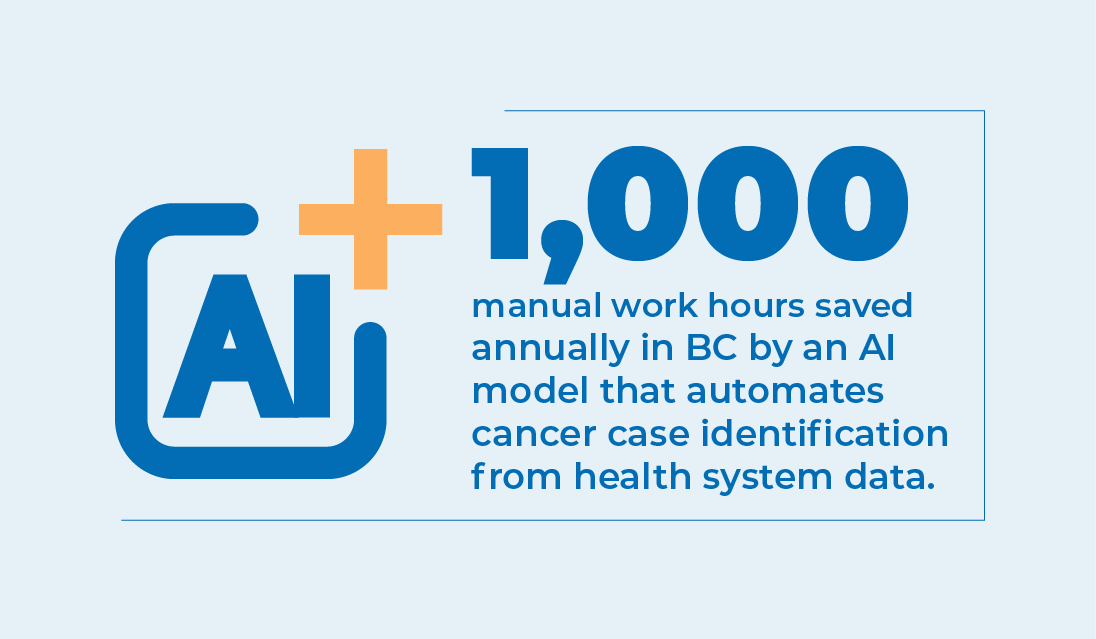
In many registries, data processing delays can stretch up to four years, slowing the system’s ability to monitor trends and identify gaps in cancer prevention and care within the Canadian population. In British Columbia, an AI model built by the BC Cancer Registry team to automate cancer case identification from health system data has been integrated into registry operations, saving approximately 1,000 manual work hours annually. This frees cancer data professionals to focus on improving data quality and the timeliness of data collection.
The BC team is now partnering to adapt and implement the model in other jurisdictions, including Alberta, Manitoba and Nova Scotia. The model is already in production in Newfoundland and Labrador, where it is showing strong results and demonstrating how Canada can lead in sovereign AI applications.
A key advantage of this approach is that it supports collaboration while respecting privacy legislation and strong data and AI governance. Rather than sharing patient data, jurisdictions share only the model, allowing each province to apply it within its own systems. This has enabled faster uptake and broader collaboration, while ensuring patient information remains protected.
By introducing automation to address processing bottlenecks, the approach delivers significant time savings and enables domain expert teams across participating provinces to spend more time on data quality and timeliness.
Artificial intelligence has the power to transform cancer care in Canada, relieving severe system strain and improving patient outcomes. To realize this potential, we must train AI models on Canadian data that reflect our diverse populations. The Canadian Partnership Against Cancer’s leadership is critical here – ensuring inter-jurisdictional collaboration, keeping health equity front and centre, protecting Canadian data sovereignty, and closing gaps in care for everyone.
– Dr. Raymond Ng, Scientific Director, Data Science Institute of UBC; Tier 1 Canada Research Chair in Data Science and Analytics
A single standard for radiation data
Cancer treatment data is often recorded inconsistently – across jurisdictions, within provinces and even within individual hospitals. This fragmentation creates barriers to continuity of care, particularly for patients receiving treatment across multiple facilities.
Standardization improves more than data quality. For patients, it means their treatment record can follow them seamlessly across care sites. For the system, it reduces the cost and risk of fragmentation and strengthens resilience against disruptions such as cyberattacks, where inconsistent data has historically complicated recovery.
This year, partners supported by CPAC reached a major milestone. For the first time, the Canadian Partnership for Quality Radiotherapy (CPQR, a standing committee of the Canadian Association of Provincial Cancer Agencies, funded by CPAC), the Canadian Artificial Intelligence & Data in Radiotherapy Alliance (CADRA) and provincial partners are working towards adopting a single international standard for recording radiation therapy data. Implementation tools and auditing frameworks are now being deployed in cancer centres in Ontario and Nova Scotia as early adopters.
A clearer, more equitable picture of system performance
Improving system performance requires not only better data infrastructure, but better measurement – indicators that capture meaningful outcomes and reflect the experiences of all populations.
This year, CPAC and its partners reached consensus on a set of system performance indicators across the cancer continuum – from prevention, screening and diagnosis to treatment, survivorship and system sustainability. Work also began on a new public data dashboard to make this information easier for health system leaders and researchers to use.
A central focus is equity. System performance reporting will include data on sociodemographic factors, such as income, geography and racialized groups, where possible, helping to identify gaps in access, experience and outcomes and guiding actions to improve health equity.
With funding support through the cancer data strategy, progress is also visible at the jurisdictional level. In Manitoba, race, ethnicity and Indigenous identity data collection has been implemented across CancerCare Manitoba’s patient registration areas, building one of the most comprehensive approaches in the country. The work builds on a foundation established by the Ongomiizwin Indigenous Institute of Health and Healing and lessons from the province’s previous rollouts to the BreastCheck program and provincial inpatient facilities. The approach is supported by ongoing engagement with Indigenous and racialized communities to help ensure the data are collected and used respectfully, safely and appropriately. This work is enabling the province to more clearly identify cancer care disparities, allocate resources where they are most needed and accelerate efforts to close health-equity gaps.
In Prince Edward Island, voluntary collection of race and ethnicity data through health card applications and renewals was implemented this year, supported by CPAC. This investment positions PEI to become the second province in Canada to collect this information through its health card system.
CPAC is also strengthening analytic capacity across jurisdictions – supporting the transition to open-source tools, building skills and creating opportunities to share insights. National webinars and communities of practice are helping partners learn from one another and apply data more effectively in decision-making.
Supporting First Nations, Inuit and Métis data sovereignty
First Nations, Inuit and Métis partners are central to determining how data about their communities is governed, collected and used. This work is grounded in principles of self-determination and trust.
This year, CPAC convened a First Nations, Inuit and Métis Data and Data Governance Steering Committee, bringing together leadership from First Nations, Inuit and Métis organizations and governments and cancer agencies to set priorities for cancer system performance measurement and reporting. This ensures approaches are led from the outset by First Nations, Inuit and Métis and aligned with their data governance principles.
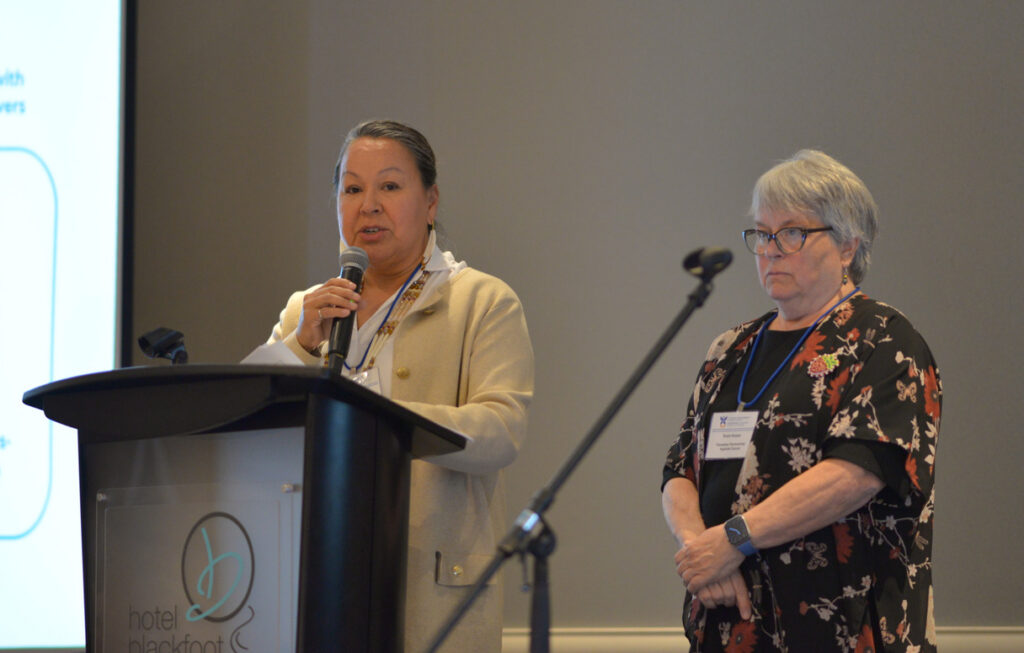
A national environmental scan led by the Alberta First Nations Information Governance Centre provides an “Indigenous-led exploration of cancer research and data governance…[and] calls for a reimagining of how cancer data is understood, governed, and used — not as a deficit to be studied, but as a relationship to be honoured.” In addition, investments in analytic capacity in the territories are generating new insights into cancer patterns in northern and remote communities.
With funding support through the cancer data strategy, First Nations, Inuit and Métis data sovereignty is being upheld at the jurisdictional level:
- Ontario is working with First Nations, Inuit, Métis and urban Indigenous partners to implement and sustain an Indigenous data governance process that will support First Nations, Inuit and Métis data sovereignty at Ontario Health.
- The Saskatchewan Cancer Agency is working with Northern Intertribal Health Authority and Métis Nation-Saskatchewan to enhance data linkages in alignment with First Nations and Métis data governance principles to advance Peoples-specific, self-determined priorities for cancer surveillance and reporting.
This progress is essential to ensure that communities ultimately determine how their data is managed, protected and used.
There’s knowledge in the communities. Not only just from the Knowledge Holders, but also community contexts, cultural knowledge, different ways of knowing and being and doing, that must be recognized in the health systems. If we’re ever going to improve the patience experience and improve outcomes, we have to make space for cultural and community knowledge.
– Mariette Sutherland, strategist, planner and evaluator, Whitefish River First Nation
Learning from the world’s best cancer systems
Understanding how Canada’s cancer system compares internationally is an important part of continuous improvement. CPAC continues to support Canadian participation in the International Cancer Benchmarking Partnership, enabling comparison of outcomes, care models and diagnostic pathways across countries.
Several jurisdictions also contributed to a new Organization for Economic Co-operation and Development cancer report, which provides a broader international reference point for assessing system performance and identifying opportunities for improvement.