
New horizons, big potential
November 28, 2025
Reflecting on the 2025 Canadian Cancer Research Conference with Dr. Craig Earle
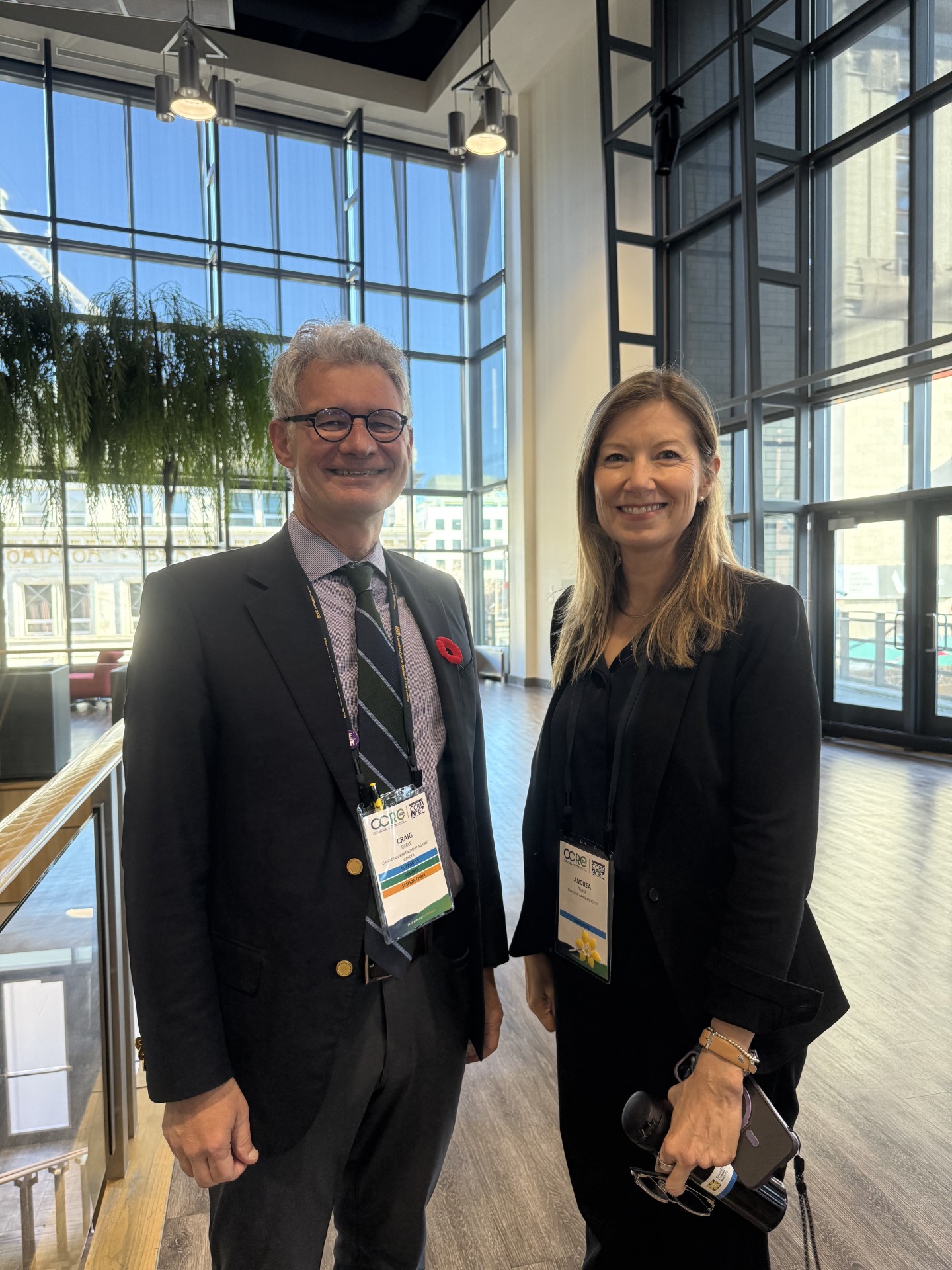
The 2025 Canadian Cancer Research Conference (CCRC) took place from November 2 to 4 in Calgary. Hosted by the Canadian Cancer Research Alliance, the conference brings together researchers, trainees, clinicians and decision-makers for a robust agenda spanning the cancer research spectrum.
The Canadian Partnership Against Cancer (CPAC) is proud to be one of the premier conference supporters. CEO Dr. Craig Earle was in attendance and has brought back insights, excitement for the future of cancer research and some vital takeaways for CPAC’s ongoing work in improving cancer outcomes in Canada.
How has the conference grown and evolved over the years?
I’ve attended every CCRC meeting from the very start. If you go back to the very first one, around 15 years ago, it was largely a basic science meeting. There is some focus on clinical trials now, and it’s really expanded much more into health services research, including areas like survivorship and adolescent and young adult issues.
Another great change has been the cultural integration and inclusion of the Indigenous stream, which First Nations, Inuit and Métis and non-Indigenous attendees have found to be very enriching.
We’ve also seen the introduction of the Patient Involvement in Cancer Research Program (PIP) over the years. The opportunity for researchers to be able to interact with and take questions from patient partners in attendance can really ground the work in what’s important to its beneficiaries.
As you mentioned, Indigenous knowledge was a prominent feature at CCRC this year. Why do you think it is important to highlight this aspect of cancer research work in Canada?
This is an area of the conference that has really evolved, and we need to keep highlighting it to help researchers better understand equity principles such as “nothing about us without us” and to ensure research involving First Nations, Inuit and Métis is led or co-led by Indigenous researchers. We also want to make sure we’re doing research in a good way that engages communities, especially around issues of data governance.
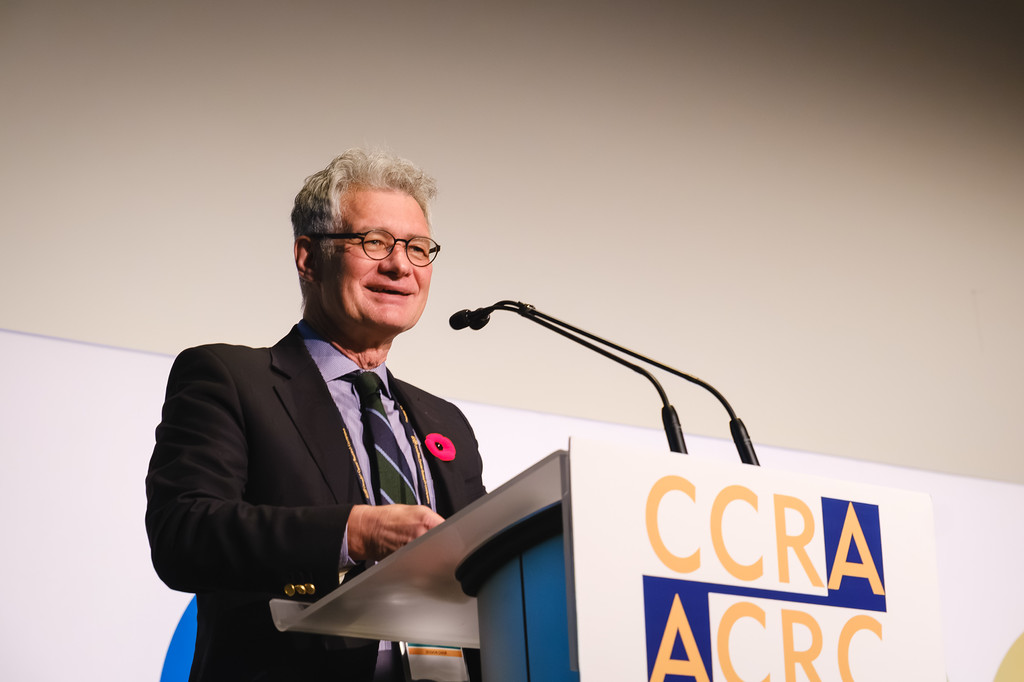
All research, in one way or another, depends on data. There are great opportunities now, particularly with artificial intelligence, which requires huge amounts of data for training. Canada has the potential to collect some of the best data in the world because of our largely public healthcare system.
– Dr. Craig Earle, MD, CEO
Speaking of data, you delivered a presentation at CCRC focused on big data in cancer research. How was it relevant to this year’s conference?
The session I presented in was called “BIG data in cancer research: Too BIG to fail?” I titled my talk, “Too Small to Succeed.” What I meant by that is that despite all the potential, our data is still very fragmented and siloed, and it’s hard to get access to it. A lot of it is out of date before it’s even available. So, while it may seem big, it’s small in other ways.
But there is still great potential for improving it. We want to make sure cancer data in Canada is harmonized, interoperable, well-governed, and that includes data with race, ethnicity and Indigeneity identifiers.
Was there a particular session you attended that stuck with you? Why did it make an impact?
There were several. The session on the commercialization of research by Creative Destruction Lab was very different from others. In it, several research entrepreneurs talked about how they found that the best way to translate the knowledge of their research findings, and to get those findings into use, was to commercialize them.
They spoke to both the approaches and challenges to doing that. Suppose, for example, they wanted to commercialize a new laboratory test. They would make sure they had already worked with hospitals and various healthcare systems to confirm that they were open, willing and maybe even committed to using the test once it was ready to be incorporated into the system.
I also attended a session supported by the Canadian Institutes of Health Research (CIHR) that discussed best practices with respect to AI in research.
Speakers talked about the use of AI to write grants and papers, which can help level the playing field for researchers for whom English is not a first language.
A somewhat controversial issue that was also discussed was the use of AI in reviewing grants and the potential for privacy issues if using unlicensed AI software. CIHR doesn’t allow AI to be used in reviewing grants, but others in the session talked about how they’ve been able to use it to improve their reviews.
Some CPAC partners presented new resources at the conference. How do you see CPAC aligning with this work?
The Canadian Cancer Society put forward the 2026–2035 Pan-Canadian Lung Cancer Action Plan, which spans the spectrum from prevention to diagnosis and treatment, and dovetails strongly with CPAC’s work in tobacco cessation, lung cancer screening and palliative care.
The Canadian Association of Provincial Cancer Agencies introduced new models of care, including navigation enhanced by AI and home delivery of cancer treatment such as immunotherapy and chemotherapy. These models hold promise, especially in northern areas like Nunavut, and CPAC is pleased to have funded some of this work as it aligns with our own models of care initiatives.
What are your three biggest takeaways from this year’s conference?
One of my biggest takeaways came from a session on the rising incidence of cancer in people under 50 and the effect of metabolic syndromes in contributing to this, as well as how anti-GLP 1 drugs may decrease the incidence of cancer.
Another important discussion was around microplastics, forever chemicals and environmental factors contributing to cancer incidence.
And very importantly, I’m thinking about the focus on diversity of patients and communities through all pillars of research, health services and clinical trials.
What are you most excited about for the future of cancer research?
The potential for data and AI to enhance and speed up the research process, as well as the expansion of treatment options. We’ve seen advancement around immunotherapies, circulating tumour cells, liquid biopsies, genomics, biomarkers and more. There are incredible things happening in treatment and diagnostics.
The 2027 Canadian Cancer Research Conference will be held in Montreal, Quebec.