
Colorectal cancer screening indicators
Key statistics on colorectal cancer
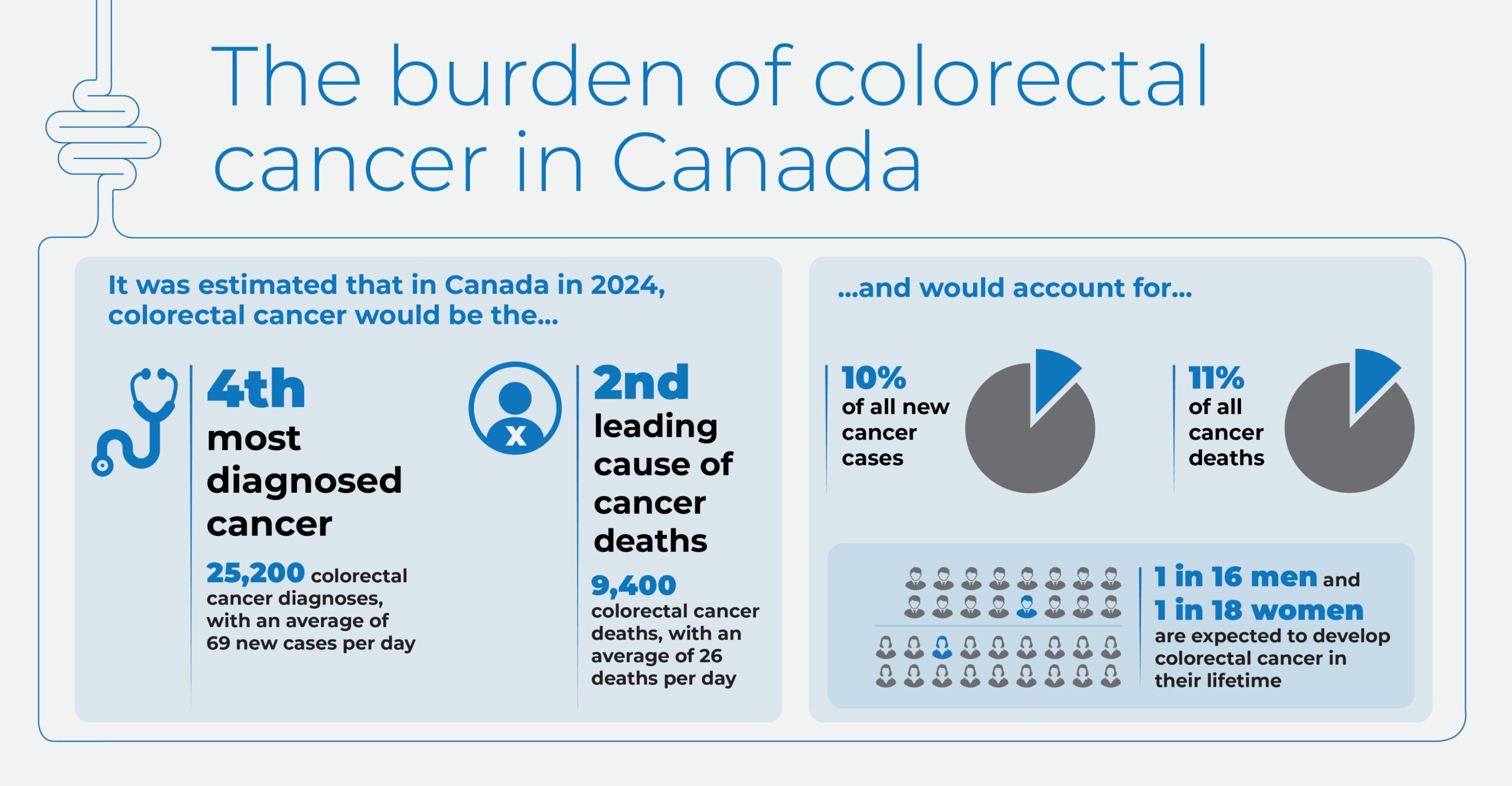
Data source: Canadian Cancer Society, Colorectal cancer statistics. 2024
Incidence rates of colorectal cancer
Since the launch of provincial colorectal cancer screening programs in 2007, Canada has seen a significant decline in new cases. Age-standardized incidence rates have dropped by 24% among adults aged 50-74 from 2009 to 2022. This reduction is partly due to the emphasis on early detection and removal of precancerous polyps. Evidence from randomized controlled trials shows that using a fecal test for screening is an effective way to lower both the incidence and mortality of colorectal cancer.1
Although individuals of any age can develop colorectal cancer, the highest incidence of colorectal cancer is found in those over 50 years old. Colorectal screening is available in all jurisdictions to individuals who are asymptomatic (no signs or symptoms of colorectal cancer), at average risk for colorectal cancer and focuses on those aged 50 and older.
Age-standardized incidence rates for colorectal cancer in Canada in the screen-eligible population (ages 50-74), 2009 to 2022
Rates exclude Quebec and Nova Scotia.
Incidence rates are age-standardized to the 2021 standard population.
The COVID-19 pandemic impacted routine colorectal cancer screening in 2020 and may have affected incidence rates from 2020 to 2021.
Data source: Canadian Cancer Registry, Statistics Canada.
Age-standardized incidence rates for colorectal cancer in Canada, by age group, 2022
Data excludes Quebec and Nova Scotia.
Incidence rates are age-standardized to the 2021 standard population.
Data source: Canadian Cancer Registry, Statistics Canada.
- Zheng S, Schrijvers JJA, Greuter MJW, Kats-Ugurlu G, Lu W, de Bock GH. Effectiveness of colorectal cancer (CRC) screening on all-cause and CRC-specific mortality reduction: a systematic review and meta-analysis. Cancers. 2023 Mar 24;15(7):1948. [Available from: https://www.mdpi.com/2072-6694/15/7/1948]