
Queering Cancer: Making cancer systems work for 2SLGBTQI+ communities in Canada
Kim Meeking discusses how integrating lived experience and person-centred support is vital for improving cancer care for sexual and gender diverse people.
June 8, 2026
From gaps in medical training to being misgendered in waiting rooms, 2SLGBTQI+ people across Canada experience barriers in accessing cancer care. These inequities erode trust in the healthcare system, often causing queer and trans patients to delay or avoid the care they need.

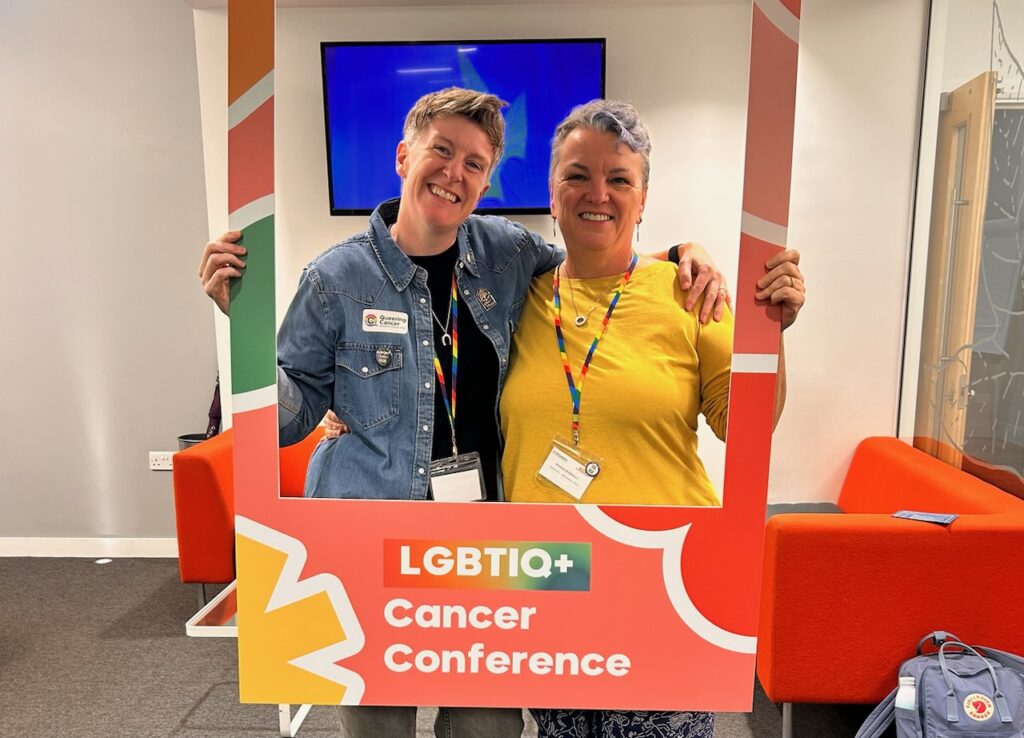
This Pride Month and Season, the Canadian Partnership Against Cancer (CPAC) is highlighting Queering Cancer, a national organization working to close these gaps. We spoke with Director and Co-lead Kim Meeking (she/they), a radiation therapist and clinical health researcher based in Nova Scotia on the unceded territories of the Mi’kmaq people. Drawing on both professional expertise and lived experience as a genderqueer lesbian, Meeking, along with their wife Dr. Amanda Bolderston and the Queering Cancer team, is helping reshape cancer care in Canada to ensure sexual and gender diverse people feel seen, respected and safe throughout their cancer journeys.
How did Queering Cancer come about?
Kim Meeking: Queering Cancer began with three queer and trans graduate students from healthcare backgrounds (including Amanda) who recognized a major gap in cancer information and support for 2SLGBTQI+ people. The project was initially funded through a Canadian Institutes of Health Research grant.
Mary Morgan, a lesbian living with multiple myeloma in British Columbia, became Queering Cancer’s founding community partner and helped shape the organization’s values, priorities and ethos from the beginning.
After 18 months of development, consultation and reviews, Queering Cancer officially launched in October 2020. Since then, the organization has continued to grow. In 2022, we welcomed community partners Laura Imayoshi and Tristan Bilash, whose lived experiences help ground and guide the work we do. Most recently, we formally incorporated as a registered non-profit, an important step toward sustaining and strengthening the organization for the future.
What systemic and day-to-day challenges do 2SLGBTQI+ people face in cancer care?
System-level barriers can make cancer care more challenging to navigate for 2SLGBTQI+ communities. An example of this would be the lack of education that healthcare providers receive about queer and trans health needs and histories. Medical students only receive about five hours of education across their whole curriculum and most of this relates to HIV and AIDS. Without training in inclusive and affirming care, and a foundational understanding of health inequities queer and trans people have faced (and continue to face), providers are often unprepared to sensitively care for 2SLGBTQI+ patients.
These systemic challenges show up in everyday interactions where patients’ identities, relationships and needs are overlooked. Providers may not ask about sexual orientation or gender identity and may instead rely on assumptions. For example, a lesbian with breast cancer might be repeatedly asked about her husband despite correcting staff multiple times. A trans man attending gynecologic oncology appointments may be continually referred to as “female” in waiting rooms and electronic health records. Staff may see these interactions as routine or harmless, but their cumulative effect can take a toll. They create emotional distress, reduce trust, and can even lead to queer and trans patients delaying or avoiding care altogether.
Why is understanding these experiences important?
Understanding how people of diverse sexualities and gender identities experience cancer care is essential if we want care to be tailored, supportive and affirming. At its heart, this is about delivering person-centred care, something every healthcare professional strives to do.
When healthcare providers understand and acknowledge people’s identities and lived realities, it helps build trust, improve engagement with care, and enhance the overall care experience.
– Kim Meeking
Most importantly, inclusive cancer care improves outcomes. Patients who feel respected and affirmed are more likely to trust their providers, share concerns openly, adhere to treatment plans, and engage with supportive care services.
What are the main areas of growth needed for 2SLGBTQI+ cancer care in Canada?
One area that stands out is the intersection between cancer care and gender-affirming care. For transgender and gender diverse patients, cancer treatment decisions can have profound implications for identity, embodiment, fertility, hormones and well-being. There is still much to learn about how cancer teams and gender-affirming care providers can work together to support patients in their decision-making.
Another major area for growth is inclusive data collection across cancer care and research systems in Canada. Right now, many healthcare systems do not routinely collect sexual orientation or gender identity data, which means 2SLGBTQI+ patients often remain invisible in research, policy and service planning. At the same time, these conversations must be approached thoughtfully and respectfully and, vitally, include people with 2SLGBTQI+ lived experience.
Inclusive data collection needs to prioritize patient privacy, informed consent, and sensitivity in how questions are asked and how information is used, stored and shared.
– Kim Meeking
What is the TRANSforming Gyne Cancer Care project?
TRANSforming Gyne Cancer Care is currently our flagship project and focuses on improving gynecologic cancer care for transgender and gender diverse people. The project is funded by the Canadian Cancer Society with important support from CPAC whose commitment to advancing equitable and inclusive cancer care in Canada has really helped to strengthen this project.
The project includes an in-depth environmental scan alongside guided conversations with transgender and gender diverse people who have lived experience with gynecologic cancer care. The goal is to better understand existing gaps, barriers and opportunities, and to co-develop practical recommendations and resources led by community members themselves.
How can people support this work?
- Visit the TRANSforming Gyne Cancer Care project page
- Boost the social post
- Reach out to us if you have any questions: hello@queeringcancer.ca
Thank you.
Learn more about Queering Cancer.