
Lung cancer screening progress in Canada
Modelling
Lung cancer screening in Canada 2027-2046
This section presents projected outcomes of lung cancer screening programs with integrated smoking cessation supports. The projections assume full implementation across all provinces and territories from 2027 to 2046 and are based on modelling assumptions.
Key takeaways
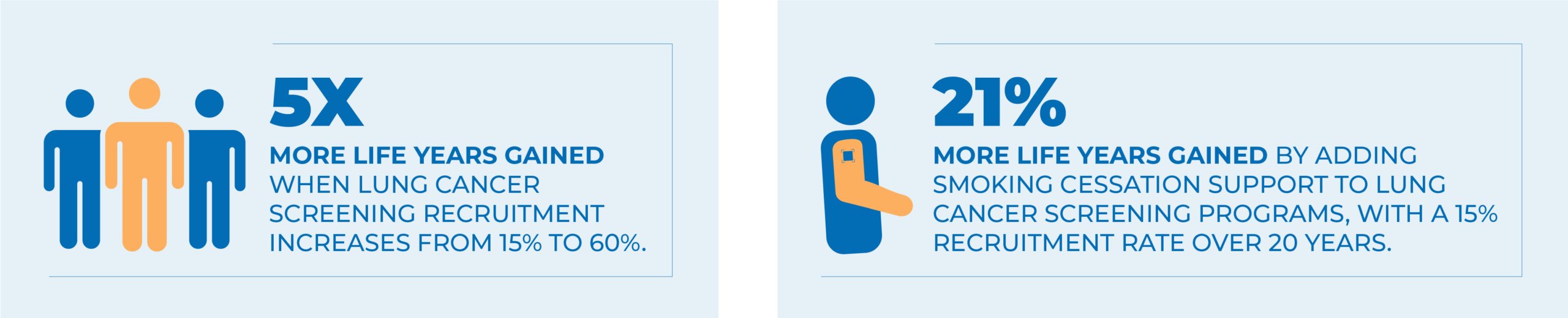
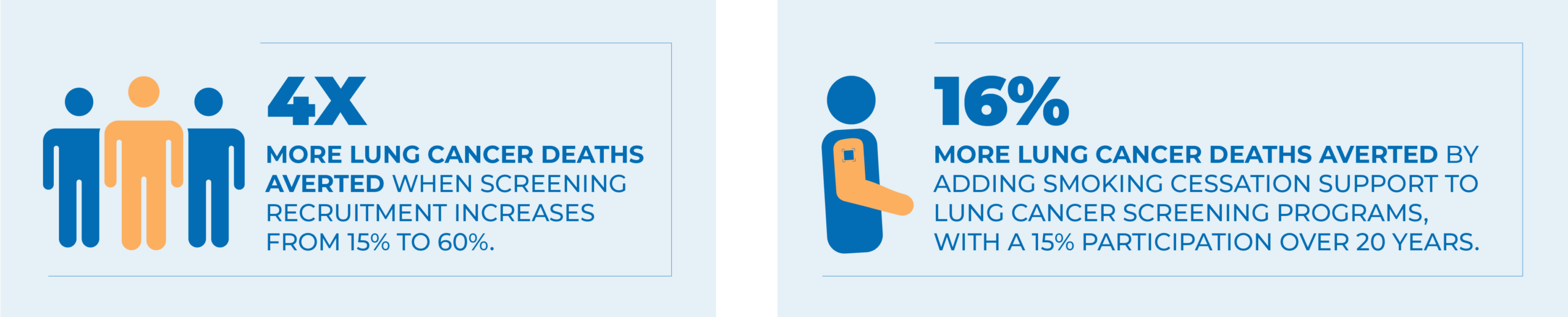
- Screening participation is a key driver of impact. Modelling shows an increase in recruitment can drive reduction in lung cancer-related deaths and increase the number of life-years gained
- Smoking cessation reduces the future cancer burden through prevention. Cessation results in an increase in life years gained and reductions in incidence, mortality and the number of people who need to be screened.
- Integrating smoking cessation into organized lung cancer screening programs can maximize the benefits of screening, delivering additional reductions in lung cancer incidence and mortality, particularly over the long term.
Projected impact of screening and smoking cessation on life-years gained across recruitment rates
Projected impact of screening and smoking cessation on lung cancer deaths averted across recruitment rates
Interpretation note: The projected impact is greatest in the early years as the existing pool of eligible individuals enters screening during the program phase-in period. Over time, annual benefits moderate as this prevalent eligible population is screened