
Monitoring and evaluation of lung cancer screening quality indicators, 2022-2024

About this resource
This digital report is the first to present lung cancer screening indicators from across Canada. This data can be used to optimize the quality and delivery of lung cancer screening programs to detect cancer at earlier stages and reduce lung cancer deaths in Canada.
See lung cancer screening indicator data on:
Key takeaways from this report
- Participation in Low Dose Computed Tomography (LDCT) after risk assessment:
-
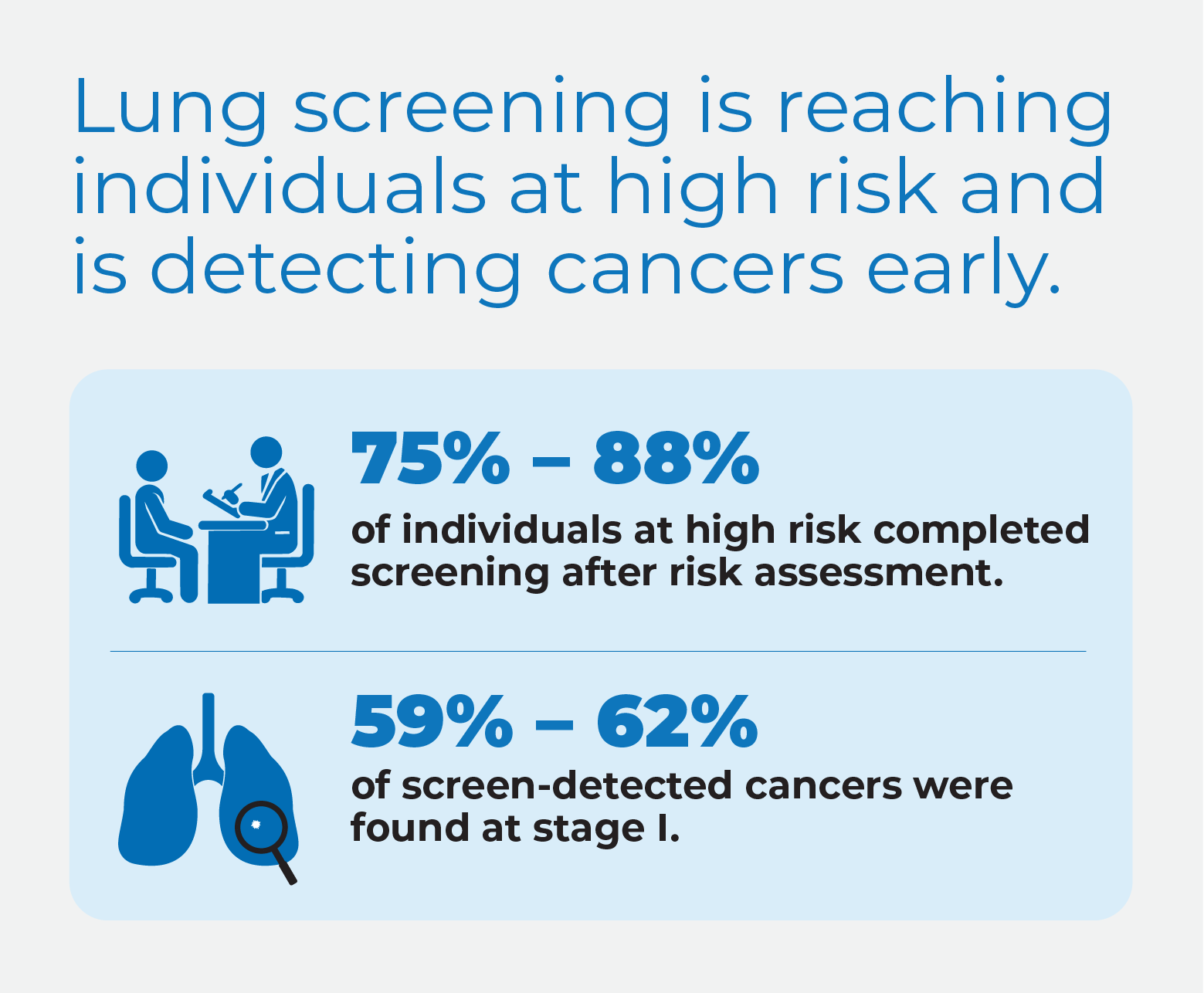
- The percentage of screen-eligible individuals who completed a routine LDCT scan after risk assessment varied by jurisdiction from 75% to 88%.
- Participation rates were slightly higher among males and people in rural areas, and varied across age groups.
- Retention rates:
- The percentage of screen-eligible individuals who returned to complete a routine LDCT scan within the recommended interval ranged from 79% to 86% across jurisdictions.
- Retention rates were highest among people in urban areas and varied across age groups.
- Recommendation following routine LDCT scan:
- 6% to 15% of individuals were recommended an early recall, and 2% to 5% of individuals were recommended a diagnostic workup.
- The recommendation to return for an early recall or diagnostic workup increased with age.
- Undergoing invasive procedures:
- Within 3 months of completing a routine LDCT scan, 2% to 3% of screen-eligible individuals underwent an invasive procedure.
- Rates increased with age.
- Invasive cancer detection rates:
- Invasive lung cancer detection rates within 6 months from an LDCT scan across jurisdictions ranged from 5 to 14 per 1,000 individuals screened.
- Invasive lung cancers were more likely to be detected among females and during the initial LDCT scan.
- Cancer stage distribution:
- A key finding is that lung cancers detected through LDCT screening were much more likely to be diagnosed at an early stage than lung cancers overall. For more information on stage distribution of screen-detected cancers, visit the Indicator Dashboard.
- The majority (59% to 62%) of invasive cancers detected by LDCT scans were stage I.
- Stage II, stage III and stage IV invasive cancers each accounted for 8% to 19% of invasive cancers detected by LDCT.
- Positive predictive value (PPV):
- The percentage of screen-eligible individuals who were referred to diagnostic workup and diagnosed with invasive lung cancer within 6 months of completing a routine LDCT scan ranged from 21% to 42%.
- PPV varied by sex and whether the screen was an initial or subsequent screen.
About the data collection
In 2024, the Partnership collected data on lung cancer screening indicators for inclusion in this report, and at this time, four jurisdictions – British Columbia, Alberta, Ontario and Quebec – had implemented lung cancer screening programs or pilots and were able to provide data. As more screening programs continue to expand, and more data on lung cancer screening program performance becomes available, this resource will be updated.
The Pan-Canadian Lung Cancer Screening Network (PLCSN) first developed lung cancer screening quality indicators in 2017 and refined them in 2022. These indicators will continue to evolve to reflect the current state of screening, and future editions of this resource will include additional indicators.
Lung cancer screening resources
- Lung cancer screening progress in Canada
- Lung cancer screening in Canada, 2026
- Lung and bronchus cancer statistics, Canadian Cancer Society
- 2026-2035 Pan-Canadian Lung Cancer Action Plan, Canadian Cancer Society